

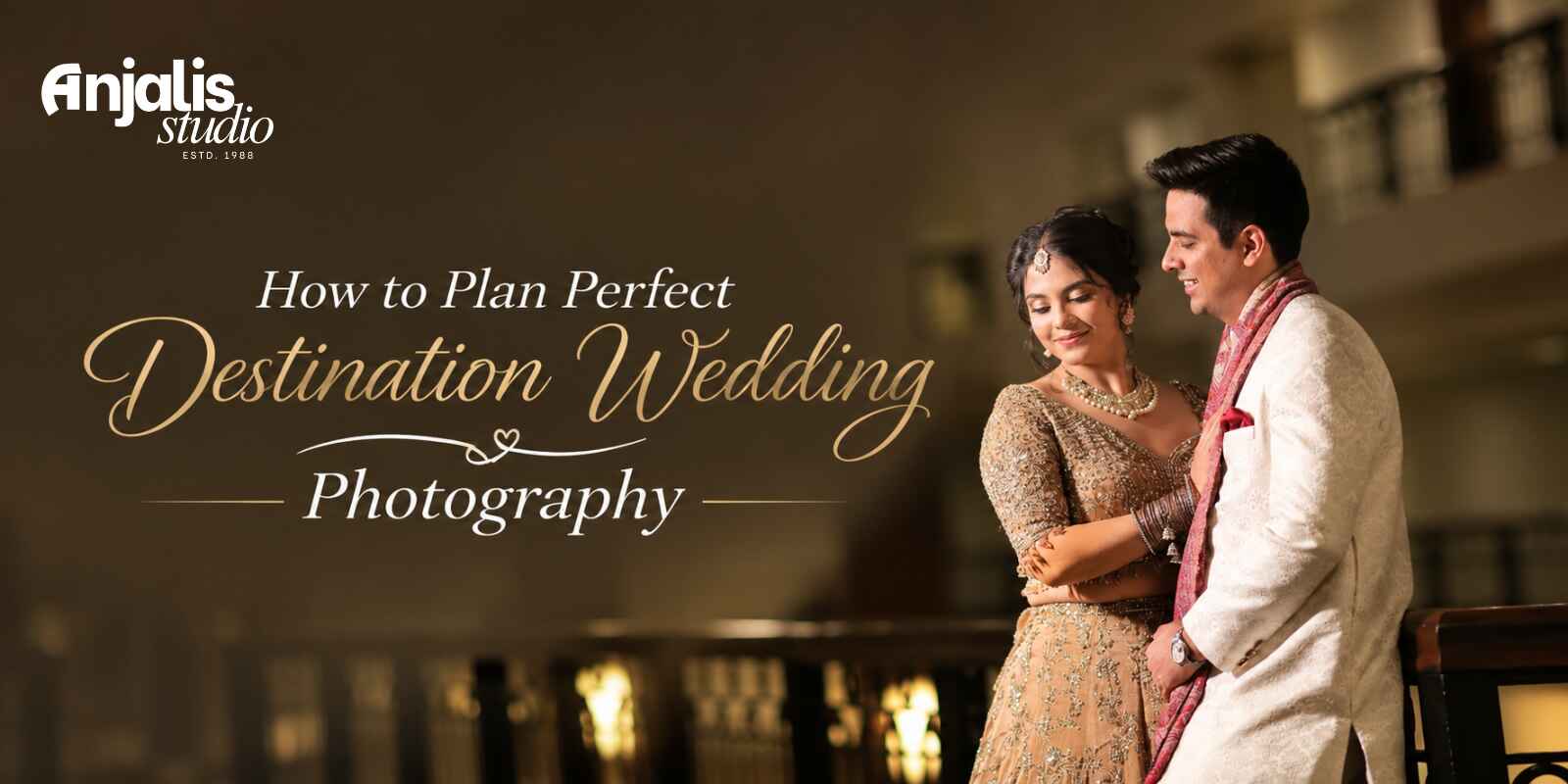
How to Plan Perfect Destination Wedding Photography
Learn How to Plan Perfect Destination Wedding Photography with expert planning tips for locations, timelines, photography styles, lighting and unforgettable wedding memories with Anjalis Studio.
A destination wedding is more than a wedding celebration. It is an opportunity to bring family and friends together in a beautiful location and create memories that last a lifetime. Whether you are planning a beach wedding, a royal palace celebration, a mountain wedding, or an intimate ceremony at a luxury resort, photography plays an important role in preserving every special moment.
From the couple's preparations and emotional family interactions to wedding rituals, candid celebrations and beautiful portraits, every moment deserves thoughtful attention. This is why understanding How to Plan Perfect Destination Wedding Photography is essential for couples who want meaningful photographs from their special celebration.
1. Choose a Destination That Complements Your Wedding Vision
The destination is one of the most important elements of wedding photography. Different locations create different visual experiences and the surroundings can influence the overall style of the photographs.
A beach destination may offer beautiful sunsets, open landscapes and romantic coastal views. A palace or heritage property can create a royal atmosphere with traditional architecture, grand staircases and elegant courtyards. Mountain destinations may provide scenic backdrops, natural greenery and peaceful surroundings.
Before finalising the location, consider the kind of photographs you want. Think about whether you prefer traditional wedding portraits, natural candid photography, cinematic couple photographs, or a combination of different styles.
When planning How to Plan Perfect Destination Wedding Photography, the destination should complement both the wedding theme and the couple's preferences. Anjalis Studio encourages couples to consider the visual possibilities of their chosen location while planning their photography requirements.
2. Select the Right Destination Wedding Photographer
Choosing the right photographer is an important decision because wedding photographs become a lasting record of the celebration. Couples should look for a photography style that matches their expectations and personal preferences.
Some photographers focus on candid storytelling, while others may specialise in traditional portraits, artistic compositions, cinematic wedding films, or a combination of styles. Reviewing complete wedding galleries can help couples understand how a photographer captures different ceremonies, lighting conditions and emotional moments.
It is also useful to discuss the photography team's experience with destination weddings, travel requirements, event coverage and expected deliverables. Clear communication helps both sides understand the scope of work before the wedding.
3. Plan the Wedding Photography Timeline in Advance
Destination weddings often include several functions over multiple days. These may include welcome dinners, mehendi, haldi, sangeet, the main wedding ceremony and reception celebrations.
Each function has different photography requirements. The haldi ceremony may involve colourful candid moments, while the sangeet may require attention to stage performances, family celebrations and low-light conditions. The wedding ceremony may include important rituals that should be captured without interruption.
Creating a photography timeline helps ensure that important moments receive sufficient attention. Couples should discuss the event schedule with the photographer and wedding planner before the celebrations begin.
Allowing enough time for couple portraits, family photographs and group pictures can also make the experience more comfortable. A realistic schedule reduces unnecessary rushing and provides opportunities for spontaneous photographs.
4. Understand the Importance of Natural Lighting
Lighting has a major influence on wedding photography. The same location can look completely different depending on the time of day, weather and available light.
Golden hour, which occurs shortly after sunrise and before sunset, is often preferred for romantic couple portraits because it can create soft and warm lighting. Daytime photography may require careful positioning to manage harsh sunlight, while evening celebrations may need suitable artificial lighting.
Indoor venues, banquet halls and decorated wedding stages may have different lighting conditions. Photographers need to consider these factors when planning camera settings, lighting equipment and photo locations.
How to Plan Perfect Destination Wedding Photography becomes easier when lighting conditions are considered before finalising the photography schedule. Anjalis Studio understands that thoughtful timing can help create visually appealing wedding photographs.
5. Explore Different Photography Locations at the Venue
A destination wedding venue often offers several beautiful locations for photography. Instead of limiting photographs to the main wedding stage, couples can explore the property's architecture, gardens, courtyards, pathways, terraces and scenic surroundings.
For a beach wedding, photographs near the shoreline can create a romantic atmosphere. Heritage properties may offer attractive backgrounds through traditional architecture, decorative doors and elegant corridors. Garden venues can provide natural backdrops for couple portraits and family photographs.
However, location selection should also consider accessibility, privacy, weather conditions and the event schedule. Couples may need permission to photograph in certain areas of a hotel or resort.
Before the wedding, discuss possible photo locations with the photographer and venue team. This helps identify suitable spots without disturbing the wedding arrangements.
6. Choose a Photography Style That Reflects Your Personality
Every couple has a different idea of their perfect wedding photographs. Some prefer traditional photographs that document rituals and family moments, while others want natural images that capture emotions and spontaneous interactions.
Candid photography focuses on genuine expressions and unscripted moments. Traditional photography ensures that important ceremonies, family portraits and group photographs are documented. Fine-art wedding photography may focus on composition, lighting and creative visual storytelling.
Pre-wedding and couple portraits can also add a personal touch to the final collection. Couples may choose cinematic photographs, editorial-inspired portraits, or relaxed pictures that reflect their relationship.
When planning How to Plan Perfect Destination Wedding Photography, it is important to communicate your preferred style instead of relying only on sample photographs. Anjalis Studio encourages couples to discuss their expectations so that the photography approach feels personal and meaningful.
7. Coordinate Photography with Wedding Decoration
Wedding decoration creates the visual atmosphere of each celebration. Floral installations, mandap designs, stage backdrops, lighting, entrance arrangements and table settings all contribute to the appearance of the wedding venue.
Photography and decoration should complement each other. A beautifully designed mandap can become an important background for ceremony photographs, while elegant stage decoration can enhance couple portraits and family pictures.
Discussing the decoration plan with the photographer can help identify important visual elements and suitable photography angles. It also allows the team to understand how lighting and stage placement may affect photographs.
How to Plan Perfect Destination Wedding Photography involves considering the relationship between décor and photography. Anjalis Studio believes that capturing the wedding atmosphere requires attention to both the people and the details surrounding them.
8. Prepare for Weather and Destination Conditions
Weather can influence destination wedding photography, particularly when ceremonies and portraits are planned outdoors. Beach destinations may involve strong sunlight and wind, while mountain locations may experience changing temperatures or unexpected rain.
Couples should discuss possible weather conditions with the wedding planner and photographer. Alternative indoor locations can be identified in case outdoor photography becomes difficult.
It is also important to consider the comfort of the couple and guests. Long outdoor photoshoots in extreme temperatures may affect the overall experience. Suitable timing, short photography sessions and convenient locations can make the process more comfortable. For international or remote destinations, local travel conditions and venue access should also be considered while preparing the photography schedule.
When researching How to Plan Perfect Destination Wedding Photography, remember that flexibility is important. Anjalis Studio encourages couples to plan alternative arrangements so that photography can continue smoothly if conditions change.
9. Plan Couple Portraits and Pre-Wedding Photography
Couple portraits are an important part of destination wedding photography. They provide an opportunity to capture the couple in a more relaxed setting away from the busy wedding schedule.
Some couples prefer romantic portraits in scenic locations, while others enjoy natural photographs that show their personalities. A destination wedding may offer unique surroundings such as beaches, heritage buildings, gardens, mountains, or luxury interiors.
Pre-wedding photography can also be planned before the main celebration. This allows couples to explore the destination and create photographs without the time pressure of wedding ceremonies.
It is useful to plan portrait locations, outfit changes and photography timings in advance. However, the session should remain comfortable and flexible rather than becoming overly structured.
10. Coordinate Travel and Accommodation for the Photography Team
Destination wedding photography involves travel and logistical planning for the photography team. The photographer may need to reach the destination before the main functions to understand the venue, identify locations and prepare equipment.
Couples should discuss travel dates, accommodation, local transportation, event timings and access permissions in advance. These details should be included in the photography agreement wherever applicable.
It is also useful to confirm the expected coverage hours, number of functions, team requirements, equipment arrangements and any additional costs related to travel. For weddings at remote locations, advance planning becomes especially important because transportation and accommodation options may be limited.
When considering How to Plan Perfect Destination Wedding Photography, travel coordination should not be overlooked. Anjalis Studio encourages couples to clarify these practical arrangements before the celebration.
11. Discuss Wedding Photography Deliverables Clearly
Before finalising a photography service, couples should understand what will be included in the final deliverables. Different photography packages may offer different combinations of edited photographs, albums, highlight films, full-length wedding films and other content.
Discuss the expected number of photographs, editing approach, album design, video formats, delivery timeline and image-sharing arrangements. Couples should also clarify how the photographs will be backed up and delivered.
It is important to understand the difference between raw photographs and edited final images. The agreement should clearly mention which files will be provided and the expected delivery process. Clear communication helps avoid confusion after the wedding and ensures that expectations are understood from the beginning.
Anjalis Studio believes that planning the final photography deliverables is just as important as planning the photoshoot itself. Couples researching How to Plan Perfect Destination Wedding Photography should discuss these details before confirming their booking.
12. Capture the Small Details and Genuine Emotions
Wedding photography is not only about couple portraits and major ceremonies. Many memorable photographs come from small details and natural interactions throughout the celebration.
The bride's jewellery, wedding outfits, invitation cards, floral arrangements, table settings, family preparations, emotional expressions and joyful guest interactions all contribute to the wedding story.
Candid photographs can capture moments that couples may not notice during the celebrations. These may include a parent's emotional expression, friends enjoying the sangeet, children playing at the venue, or family members sharing a special moment.
Couples can share important family traditions and personal details with the photographer before the wedding. This helps the photography team understand which moments matter most.
Why Choose Anjalis Studio for Wedding Photography?
Wedding photographs preserve memories that couples and families can revisit for years. Choosing a photography team that understands your preferences, communicates clearly and plans carefully can make the experience more comfortable.
Anjalis Studio can be approached to discuss wedding photography requirements, preferred photography styles, event coverage and destination-related arrangements. Whether you are planning a traditional celebration, an elegant destination wedding, or an intimate ceremony, the photography approach should reflect your expectations.
Couples looking for How to Plan Perfect Destination Wedding Photography can start by sharing their wedding date, destination, function schedule, preferred photography style and important moments they want captured.
Discussing these details in advance helps establish the photography requirements and explore suitable arrangements for the celebration.
Frequently Asked Questions
Question: 1. How to Plan Perfect Destination Wedding Photography?
Answer: Choose a destination, hire a suitable photographer and plan the photography schedule in advance.
Question: 2. When should I book a destination wedding photographer?
Answer: Book several months early to secure your preferred photographer and discuss requirements.
Question: 3. Which photography style is best for a destination wedding?
Answer: Candid, traditional, cinematic and fine-art photography are popular choices.
Question: 4. Is golden-hour photography suitable for destination weddings?
Answer: Yes, golden-hour lighting creates soft, warm and romantic wedding photographs.
Question: 5. What should I discuss with my destination wedding photographer?
Answer: Discuss photography style, wedding schedule, travel arrangements, deliverables and delivery timelines.
Contact Anjalis Studio
Website: https://anjalis.com/
Email: vivek@anjalis.com
Phone: +91 99997 77421
WhatsApp: +91 83838 70407
Studio Address:
LG13, Sector 18, Noida, Uttar Pradesh – 201301.
Contact Anjalis Studio today to discuss your photography requirements and bookings.

